
Confessions of a Fussy Sketcher: Finding Magic in the Mucked-Up Page
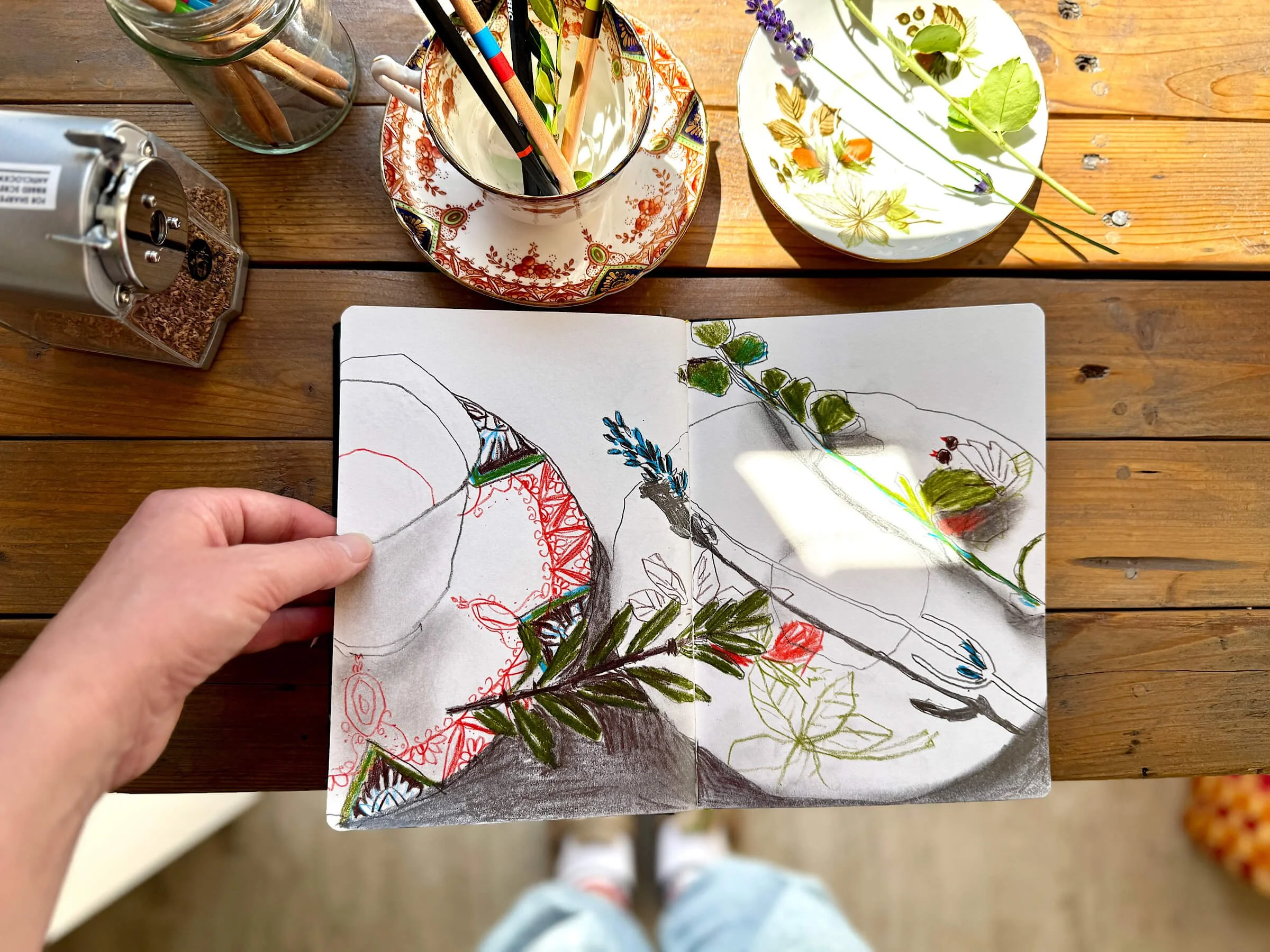
Gathering inspiration at the workbench: sketchbook play with vintage teacups, leafy sprigs, and my own BRIGHT duo pencils.
There is a huge difference between a technically perfect drawing and one full of life.
Sometimes, when people open a brand-new sketchbook, they feel immediate pressure to create a masterpiece on the first page. There's just something about those pristine flat pages that can feel daunting. They might want the perfect lines, flawless composition, and an instantly polished result. But true creativity doesn't happen when we are trying to be perfect. It happens when we permit ourselves to play, to repeat, and to find the magic in the mistakes.
If you've ever wanted to build your own creative confidence, the secret lies in changing how you look at a blank page.


Confessions of a Fussy Sketcher
I will happily let you in on a studio secret: I am a self-proclaimed fussy sketcher.
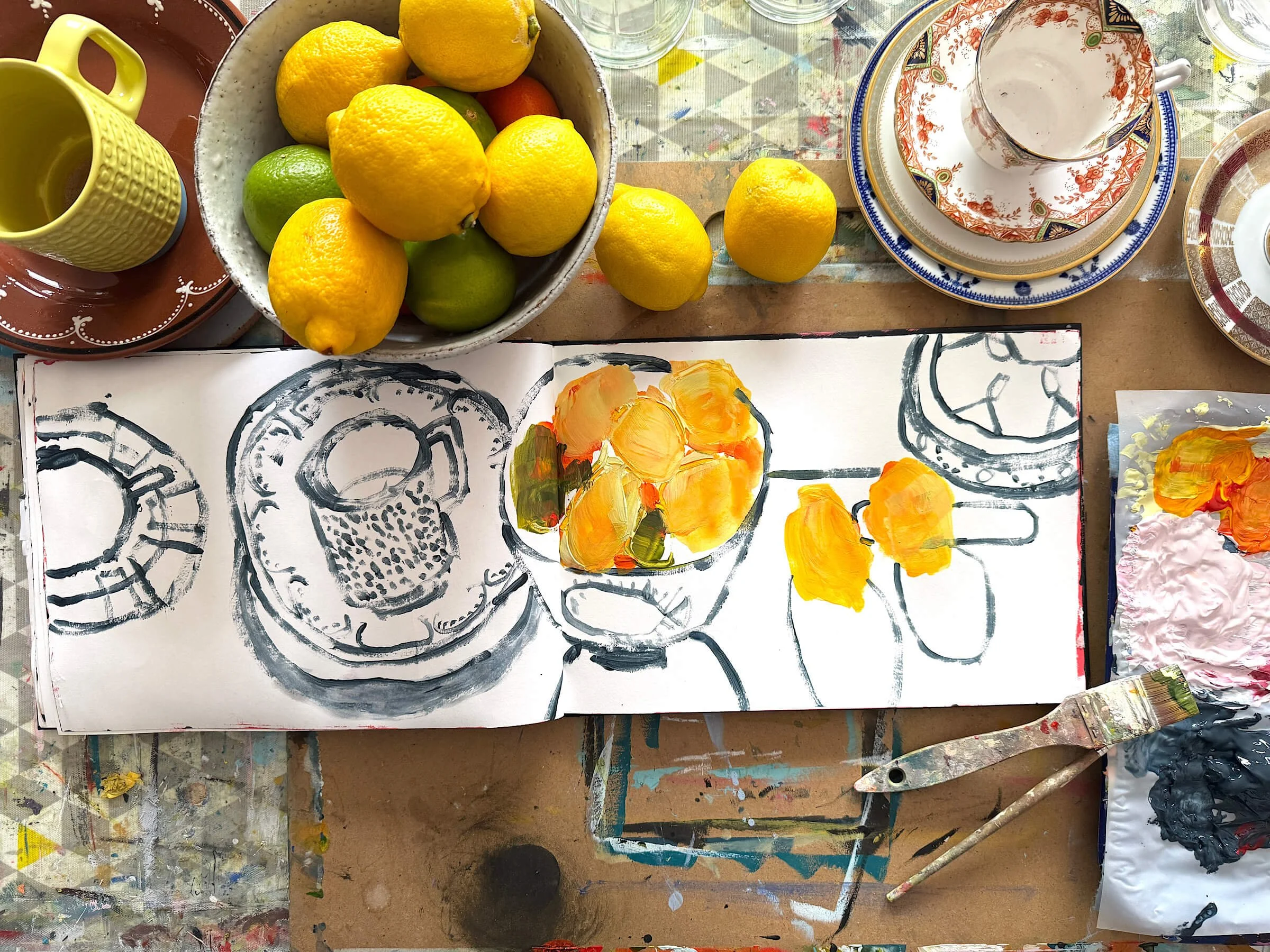
I don't want to draw just anything. I have to be captivated, or there has to be a spark of interest that ignites my imagination before I'm even willing to pick up a pencil. But when I do find that spark, and I do pick up that pencil, and when I look at the subject—let's say it's a bowl of vine tomatoes in a ceramic bowl—I don't just draw it once and move on. I tend to dive back in again and again and again. I want to get to know the objects. I want to understand how the objects interact, turn them around, see them from every angle, and keep asking myself, "What if?"
I'm not trying to get closer to a photographic replica—quite the opposite. I sketch repeatedly to find the key marks, lines, and forms needed to capture the subject's essence. It's a process of simplification. It's about stripping away the noise until only the objects' energy, movement, and joy remain.


The Superpower of Lateral Thinking
My approach to sketching and composition is deeply tied to the way my brain works. Having a dyslexic brain means I don't always look at a problem—or a blank page—in a straight line.
While that might sound like a challenge in a traditional work environment, in the art studio, it is an absolute lateral-thinking superpower. It lets me look at objects, their forms, and the space around them and see unexpected connections, playfully rearranging compositions and embracing the freedom of the "What if?" phase of a drawing.
Sketching is the ultimate playground for this kind of thinking. It's a safe space with no rules, no rigid constraints, and absolutely no wrong answers.
3 Playful Sketchbook Exercises to Build Your Creative Confidence
If you want to start your own creative practice but feel stuck looking at a blank page, try these three playful exercises to bypass your inner critic:
1. Focus on Movement, Not Perfection (Snips & Shapes)
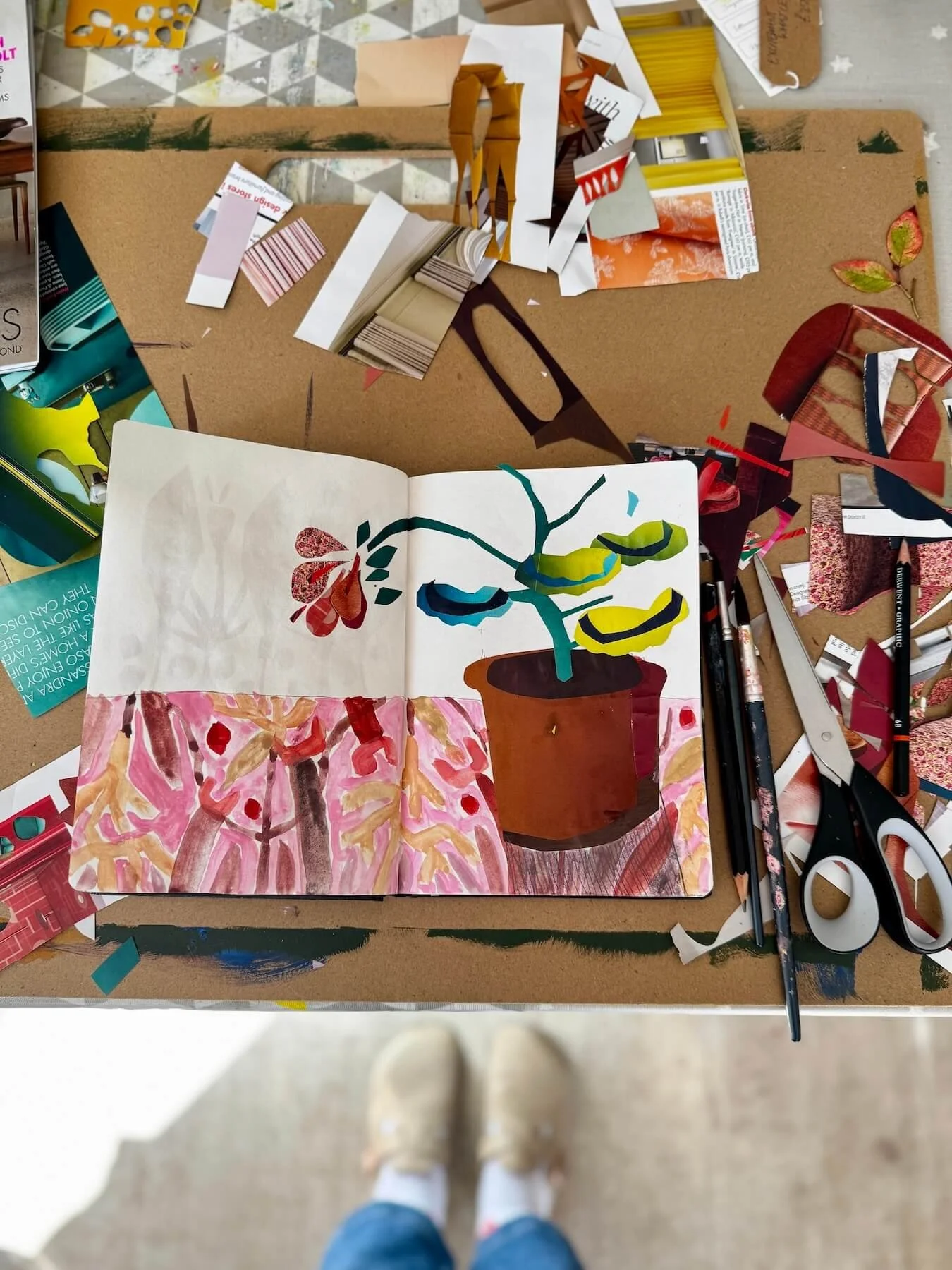
Pick a simple object in your kitchen—a piece of fruit, a teacup, or a fun plate arrangement. Try drawing these objects by cutting out their shapes from old magazine pages and glueing them in place, focusing on your hand's movement as you snip rather than trying to make perfect cuts. Let the edges wobble, stay loose, and lean into the page's crinkle as you stick the shapes down.
The Power of Repetition (and the Freedom to Turn the Page)
Keep going—drawing after drawing—and as you move through page after page, you'll start to see a wonderful accumulation of marks, information, and ideas. Lean into that creative confidence as it bubbles up and grows. The true beauty of a sketchbook is that if you don't like a page, you can turn it and start another. At the end of the day, you get to close the book. You don't have to show anyone; it is a safe space to make observations, play with marks, and explore lines. Sketchbooks are not finished spaces—they are spaces for play.
Change Your Background (The "Mucked-Up" Page)
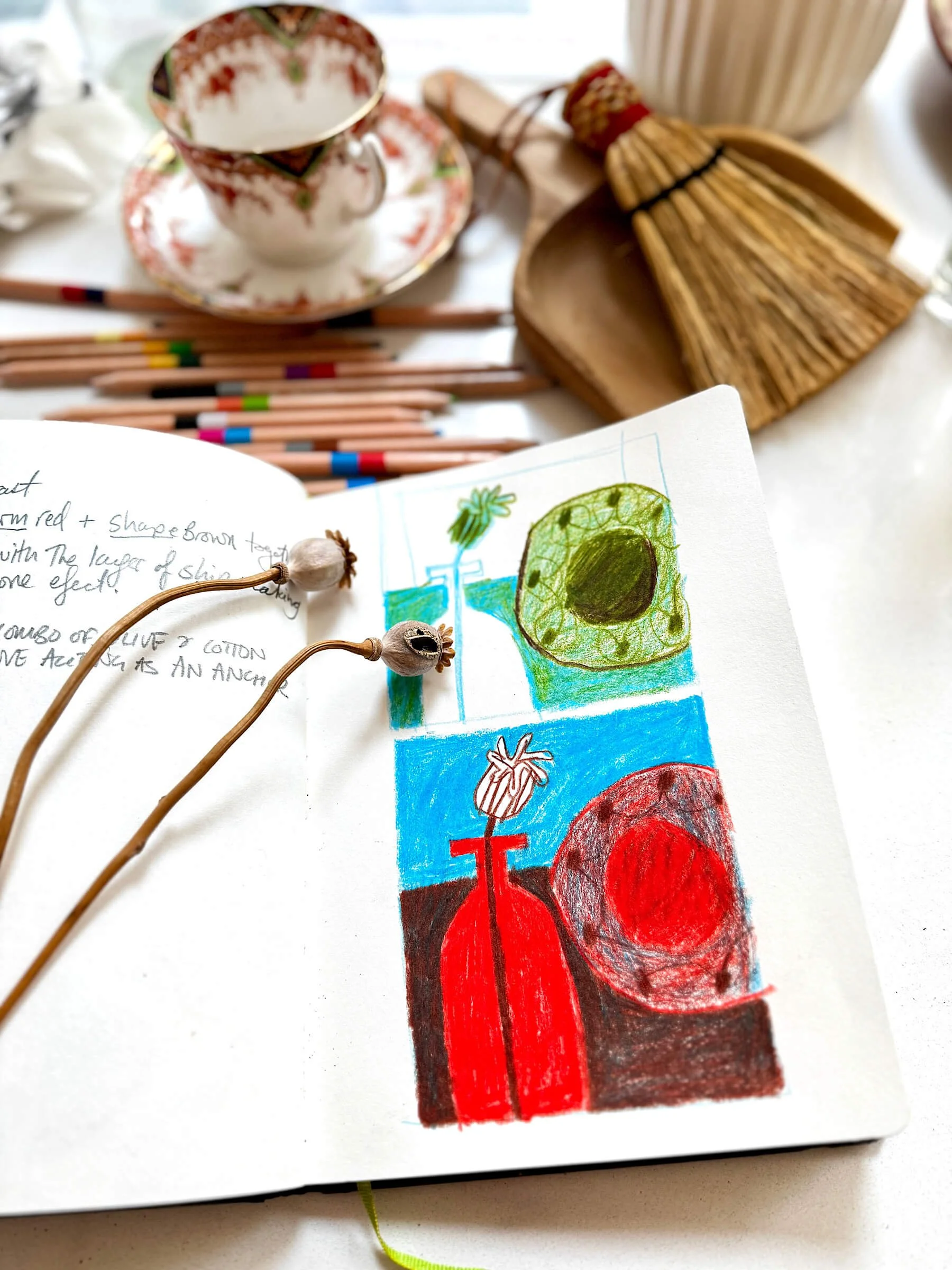
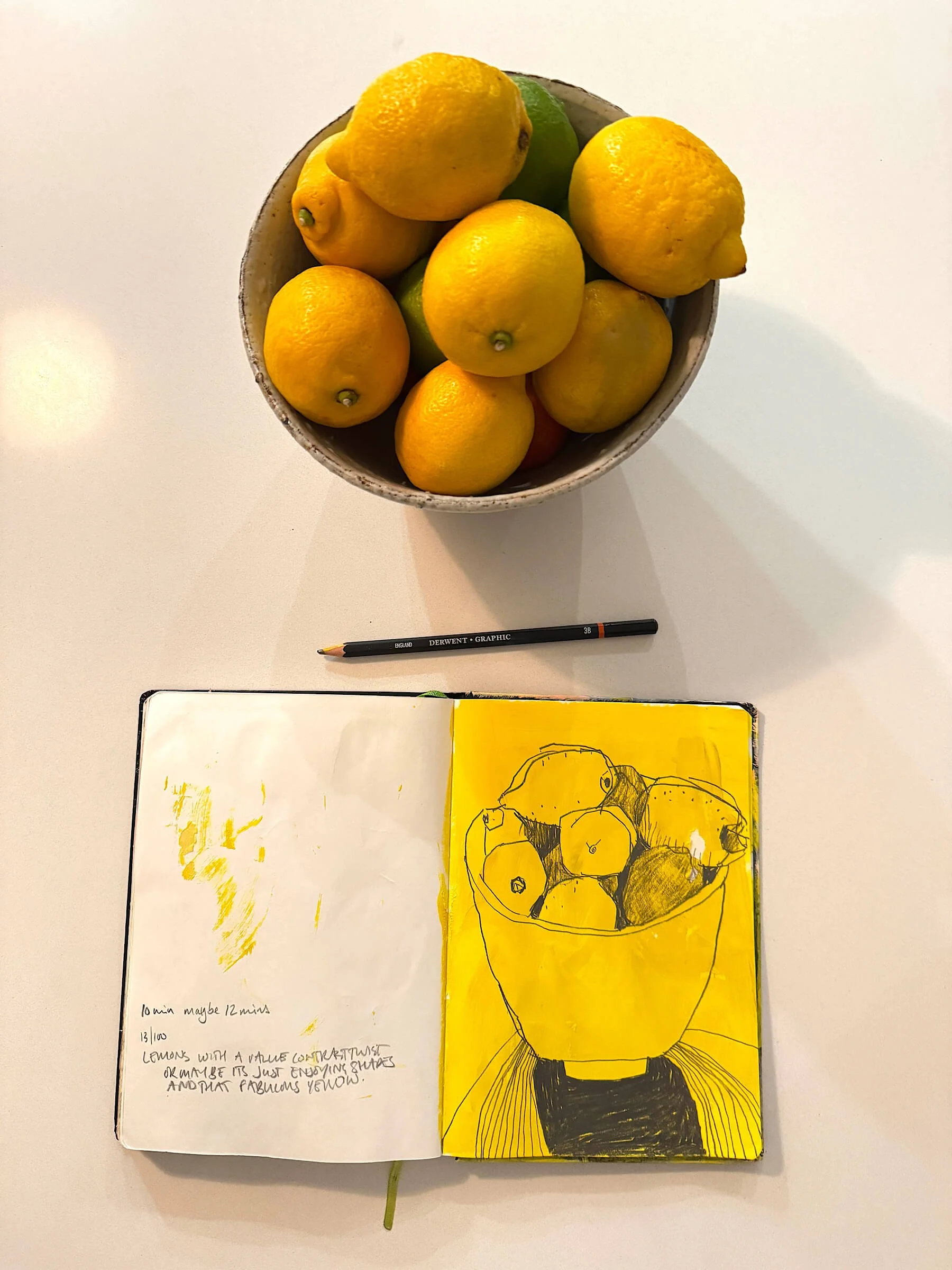
Sometimes a stark white page is the greatest hurdle. Try sketching on pre-primed coloured paper. Next time you finish a painting session with a loaded brush, wipe off the leftover colour on a sketchbook page and leave it ready for next time. A bit of colour under your pencil instantly takes the pressure off (I love using my own BRIGHT Duo Pencils for this to quickly lay down vibrant, dual-toned layers!) and makes progress feel more like a game. It's about leaning into starting from a place of play—if the page is already "mucked up" with colour, what's the worst that can happen? You're just going to add some more lines and marks, building layers and richness. Remember, sketchbook play is supposed to be fun!
Join Me for a Sketchbook Playdate
Ready to cultivate your own creative voice and embrace the joy of playful, confident sketching?
Step Into the Membership: Join Sketchbook Playdate, a creative membership designed to plant the seeds of playful curiosity, watch your sketchbook bloom, and help your creativity thrive through line, form, colour, and lateral thinking.
Stay Connected: Sign up for BRIGHT News to receive warm studio reflections, practical sketching tips, and priority announcements for upcoming workshops and original art drops straight to your inbox.